
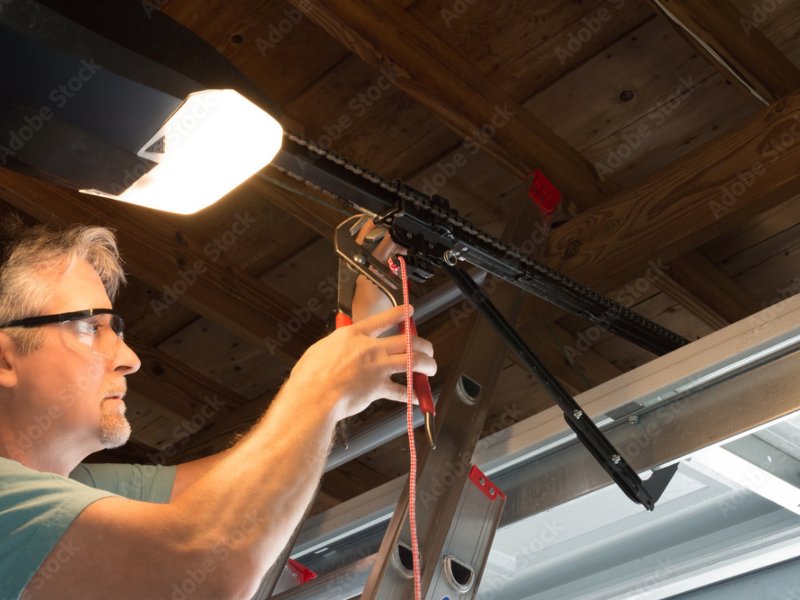
Choosing the right garage door opener installation comes down to understanding the drive type, horsepower, door size and weight, safety features, smart capabilities, noise level, and battery backup options available today. The right opener makes daily use easier, protects your family, and supports the long-term performance of your entire garage door system. Homeowners in Salida, Westcliffe, Colorado Springs, and nearby Colorado communities can rely on Rightly Garage Doors for honest guidance and professional installation backed by quality workmanship. Choosing wisely from the start saves you from mismatched equipment, premature wear, and repeat service calls.
Know the Different Types of Garage Door Openers
Understanding the main drive types is the first step toward choosing the right garage door opener installation. Each type works differently and suits different home setups.
Chain-drive openers use a metal chain to move the trolley along the rail. They are durable and handle heavy doors well, but they run louder than other options. Belt-drive openers use a rubber belt instead of a chain, which makes them much quieter and a strong choice for attached garages. Screw-drive openers use a threaded steel rod to move the trolley and require less maintenance, though they can be sensitive to temperature changes.
Direct-drive openers move the motor itself along a stationary chain, which means fewer moving parts and quieter operation. Wall-mount jackshaft openers attach directly to the torsion bar beside the door and free up ceiling space, making them a great fit for garages with low or vaulted ceilings. Knowing the differences helps you choose the right fit for your garage layout and daily routine.
Match the Opener to Your Garage Door Size and Weight
The size and weight of your garage door directly affect the horsepower and drive type needed for a proper opener installation. Choosing an underpowered opener leads to motor strain, slow operation, and early failure.
A standard single-car door typically weighs between 100 and 150 pounds and works well with a half-horsepower opener. A double-car door can weigh anywhere from 200 to 400 pounds depending on the material and insulation, and it usually needs three-quarter horsepower or more.
Insulated doors are heavier than non-insulated models, which means they require a stronger motor to operate smoothly. A trained technician can measure the door and recommend the right opener for smooth and reliable operation.
Consider Noise Level and Where the Opener Will Run
Noise level matters more than most homeowners realize during a garage door opener installation. The right choice depends on where the garage is located relative to the living space.
Chain-drive openers produce the most noise and vibration during operation. They work well for detached garages where the sound does not reach the main living areas. Belt-drive openers run much more quietly and are the preferred choice when the garage is attached to the home or located below bedrooms.
Direct-drive openers are also very quiet since the motor is the only moving part. If noise is a concern in your home, a belt-drive or direct-drive unit is worth the investment. A quieter opener improves daily comfort and avoids disturbing sleep during early morning or late night use.
Look for Modern Safety Features
Safety features are a non-negotiable part of any garage door opener installation. Modern openers include several built-in protections that keep family members, pets, and property safe during daily use.
Photo-eye sensors mounted near the bottom of the tracks detect movement in the door’s path and stop or reverse the door automatically. Auto-reverse function causes the door to reverse when it meets resistance, preventing injury or damage. Manual release allows the door to be operated by hand during a power outage.
Rolling-code security changes the remote access code each time the door is used, which prevents unauthorized access. This feature is standard on most modern openers but may be missing on older units. A trained technician can verify that all safety features are properly installed and tested before completing the job.
Think About Smart Features and Automation
Smart garage door openers have become one of the most popular upgrades during a new garage door opener installation. These features add convenience, security, and peace of mind for busy homeowners.
Wi-Fi connected openers allow you to open, close, and monitor your garage door from a smartphone app. This means you can check whether the door is closed from anywhere and close it remotely if needed. Voice assistant compatibility with devices like Amazon Alexa or Google Home allows hands-free control inside the home.
Some smart openers also send alerts when the door is left open too long or when activity is detected. Ask your technician which models offer the best compatibility with your home setup.
Check for Battery Backup and Power Loss Protection
Power outages are common in Colorado, especially during winter storms and severe weather. A garage door opener with battery backup allows the door to open and close normally even when the power is out.
Without battery backup, a power outage can leave a vehicle trapped inside or outside the garage. Battery backup units charge continuously during normal operation and kick in automatically when power is lost. Most systems provide enough power for dozens of cycles. If your home experiences frequent power interruptions, battery backup is worth prioritizing during your garage door opener installation.
Evaluate Horsepower and Motor Type
Horsepower ratings and motor type both affect how well an opener performs over the long term. Choosing the right combination supports smooth daily operation and reduces wear on every part of the system.
Common horsepower ratings include half HP for lighter single-car doors, three-quarter HP for standard double-car doors, and one HP or higher for heavy insulated or custom doors. Choosing more horsepower than needed is not harmful and often extends the life of the motor by reducing strain during every cycle.
DC motors run more quietly and efficiently than older AC motors. They also allow for soft start and soft stop features, which reduce stress on the door and hardware during each operation.
Choose the Right Rail and Drive System
The rail connects the motor unit to the door and must fit the height and depth of the garage correctly. Choosing the wrong rail length creates clearance problems and affects how the door operates.
Standard rail lengths work for most residential garages with a ceiling height of seven to eight feet. Tall garage doors or high-lift systems require longer rails that allow the door to travel the full distance without hitting the motor unit. Low-clearance garages may need a wall-mount jackshaft opener that eliminates the overhead rail entirely.
A professional installer measures the garage before recommending a rail and drive system. Getting the rail right during installation prevents alignment issues and hardware problems.
Compare Warranties and Long-Term Value
Warranty coverage is a strong indicator of how confident the manufacturer is in the quality of the product. Longer and more comprehensive warranties usually reflect better-built openers with higher-grade components.
Most entry-level openers come with a one-year parts warranty and a limited motor warranty. Mid-range and premium models often include longer coverage on the motor, parts, and belt or chain. Some manufacturers offer lifetime motor warranties on their top-tier units.
Reading the warranty terms carefully helps homeowners understand what is covered. Investing in a better-warranted opener often lowers long-term garage door repair costs.
Why Professional Garage Door Opener Installation Matters
A professional garage door opener installation protects your investment and ensures the system operates safely from day one. DIY installation may seem like a way to save money, but mistakes during setup can create safety risks and void the manufacturer warranty.
Proper installation involves mounting the motor unit at the correct height, aligning the rail, attaching the trolley, setting the travel limits, and testing all safety features. Each step requires the right tools and attention to detail. A misaligned opener puts stress on the door and hardware, leading to faster wear across the system.
Rightly Garage Doors technicians complete every installation with a full system inspection and safety test. Photo-eye sensors are aligned, auto-reverse is verified, and the door balance is checked before the job is complete.
Schedule Your Garage Door Opener Installation With Rightly Garage Doors
When you are ready for a new garage door opener installation, you want a team that takes the time to listen, inspect, and walk you through your options before any work begins. Rightly Garage Doors brings more than 12 years of hands-on experience to every installation, and our kitchen-table approach helps homeowners feel confident from start to finish.
Every installation includes a full 29-point inspection to evaluate the door, springs, cables, and hardware before the new opener goes in. Our work is backed by a one-year warranty on services and installs, and we proudly serve Salida, Westcliffe, Colorado Springs, and nearby Colorado communities with honest guidance and quality workmanship.
Reach out to Rightly Garage Doors today to schedule your garage door opener installation and enjoy a smoother, safer, and more reliable system for years to come.